What a WMS includes for a small factory
If you run a small or mid-size factory, the problem is rarely “no software”. The problem is chaos: uncertain stock, spreadsheets, missing materials, orders that are hard to track. A good WMS brings order to the real factory flow. The starting package begins at €14,000.

Roman
Daniel-Gabriel
What it fixes, in short
It shows what you have in stock, what production consumes, and what leaves as a finished item. One clear thread from raw material to sold product. Without keeping “the truth” in three different files.
Excel, heavy ERP, or a fit-for-purpose tool?
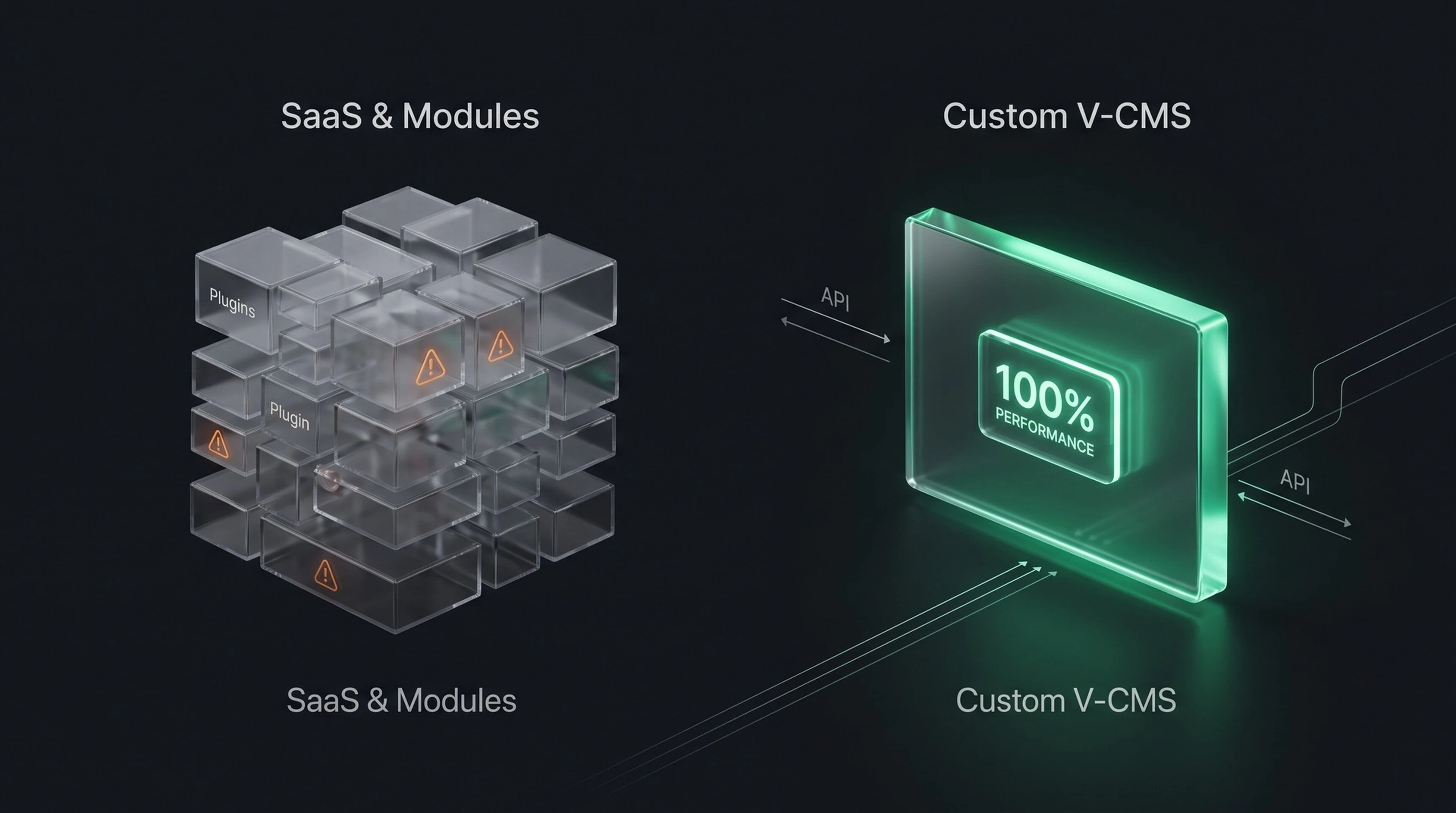
Excel works for a while, then it starts lying. Big ERPs can do “everything”, but they bring per-user costs, long rollouts, and modules a small factory never uses. A production-focused WMS stays on the essentials: stock, recipes, production, traceability, sales.
If you are still chasing stock in Excel
A lot of factories land here after the same story: three Excel files, a “top-tier” ERP nobody really uses the right way, or a cloud tool with a per-user fee that does not know your production recipe. Stock does not match the floor, orders get lost between office and shop floor, and time goes into reconciliation instead of production. A factory-fit WMS flips that: one thread from raw material to sold item, without paying monthly seats and without rolling out modules you will never use.
What it should include
If one of these is missing, you usually fall back to notebooks or Excel:
- A clear catalog: products, variants, prices
- Material recipes (BOM): what goes into each product
- Correct stock by location, with history
- Production orders you can see in real time
- Item-level tracking (code / QR), not just “quantity somewhere”
- Simple sales with stock reduced correctly
- Reports that non-IT people can read
- Role-based access: everyone sees what they need, not the whole mess
Why the recipe matters
Without a recipe, production is guesswork. With a recipe, you know which materials you need, what an order costs, and what is missing before the floor stalls. When you launch an order, that recipe is saved for that moment, so later catalog edits do not silently change consumption mid-run.
What €14,000 covers
Average delivery for the base package is around 3 months after we clarify the flows. It typically includes:
- Catalog, variants, prices, and VAT
- Raw materials and recipes per product
- Multi-warehouse stock with correct consumption
- Staged production, visible on shop-floor screens
- Codes / QR on units, scanning on a phone
- Sales from the office or from a mobile device
- Reports, alerts, and a history of important actions
- No fee for every employee who logs in
What stays out of the starting package
We stay on factory and warehouse. We do not turn the project into an ERP that “does everything”:
- Full accounting, HR, payroll
- Very advanced accounting integrations
- Special builds outside the agreed flows
- Long training for the whole team (quoted separately)
- On-site servers (sized after we understand the need)
Example: Depozit Geronimo
At Depozit Geronimo, the software was built for production people, not for an ERP slide deck. The Orăștie factory has made apparel since 2001; the system connects materials, orders, stock, and sales into one tracked flow. If you want the technical details (data integrity, backups, architecture), they live in the case study. Here, the benefit matters: less chaos, more control.
Local server, no shop-floor blockers
For factories, I usually recommend an on-site server (it still works when the internet is moody) plus cloud backups. Phone scanning on the floor talks to the local network and syncs with the on-site server, so production people are not stuck if the cloud or external internet drops. Simple rule: keep copies, do not trust a single disk. Hardware details are set with the final quote.
When the investment is worth it
It is worth it when you lose time or materials to bad stock data, when production is hard to track, or when Excel has become a risk. It is not worth it for a very small workshop with one product and still-simple flows. Then you wait until the pain is obvious.
Let’s see if it fits
The initial consultation is free. We talk in factory language: what happens today, what you want tomorrow, what it costs, and how long it takes. Package details are on the Inventory, warehouse & production software page.
Ready to launch high-performing software that actually drives revenue?
Let us discuss your catalog, business workflow, and timeline.
You will get an honest technical assessment and a clear path to launch.