How the diversity of supplier applications influences e-commerce architecture
When searching for an e-commerce platform, most off-the-shelf solutions promise simple product management. However, the operational reality of a growing business is that inventory and product details rarely come from a single, unified source. More often than not, you need to collaborate with various suppliers, where each partner relies on different types of applications, varied data formats, or internal management systems that do not communicate natively with one another.

Roman
Daniel-Gabriel
Centralizing data streams originating from heterogeneous sources (such as XML feeds, CSV files, or disparate APIs) represents one of the most challenging phases of an e-commerce project. In this article, we will analyze how this diversity affects the choice of a web platform and under what conditions a custom architecture or dedicated modules become a justified option for optimizing operational costs.
Aligning standardized platforms with multiple data streams
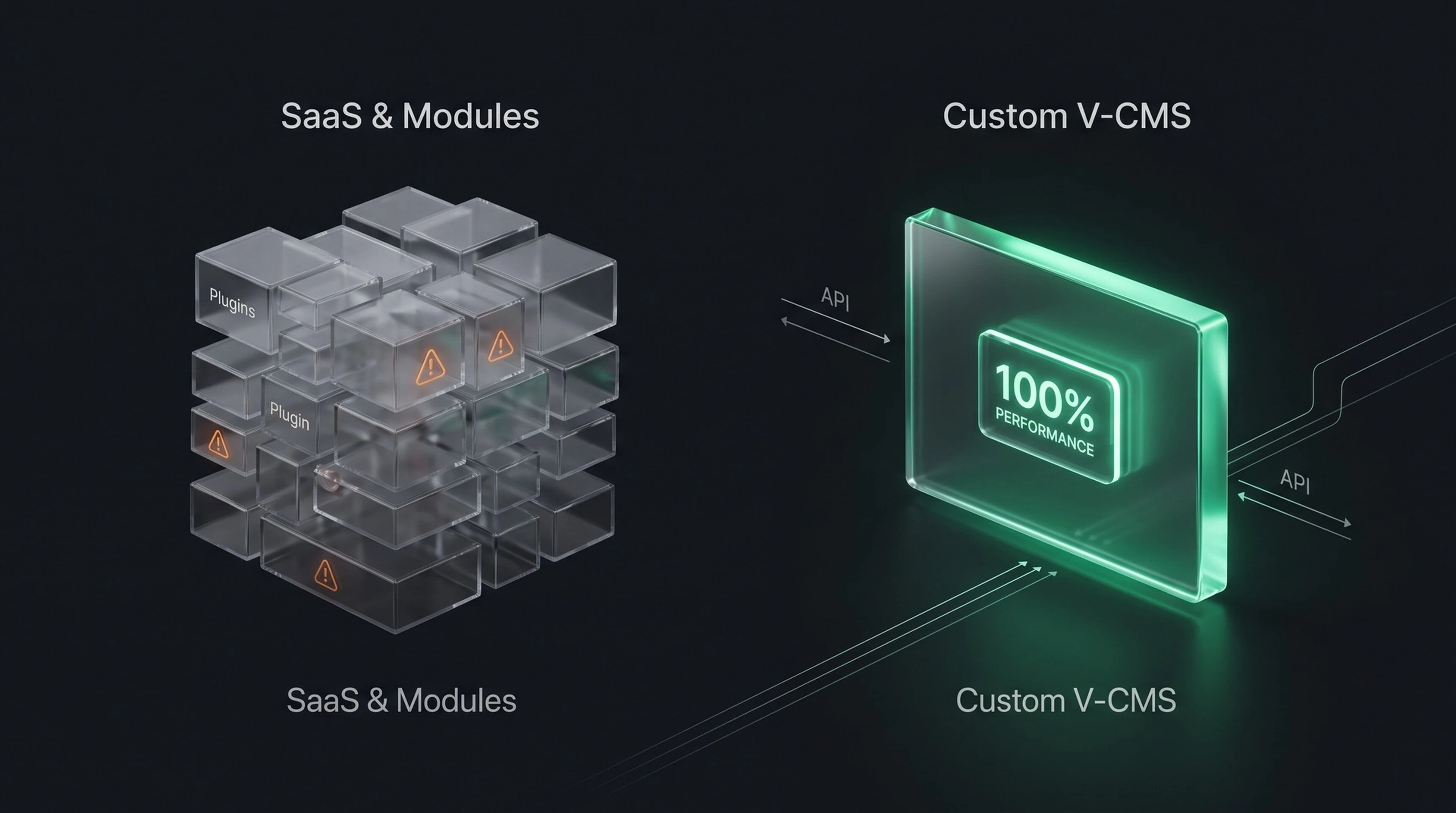
SaaS platforms and pre-built e-commerce solutions provide a stable ecosystem for standard retail scenarios. However, as your network of partners expands and their internal systems become more diverse, integration challenges emerge that require careful consideration:
- Synchronizing inventory from varied applications: If one supplier utilizes a modern ERP while another sends updates through an older tool with a proprietary structure, processing both incoming flows automatically may require additional connectors or middleware solutions.
- Inconsistent data structures: Every source application has its own way of defining categories, product attributes, and media assets, turning automatic data normalization into a complex technical process.
- Operational risks and delays: When e-commerce technology cannot seamlessly interpret data from suppliers' systems, reliance on manual processing increases, which can create discrepancies in displaying live stock levels online.
The role of an integration layer in managing complexity
To address these challenges, many enterprises adopt a modern API-driven architecture, deploying custom services specifically where requirements exceed the native capabilities of existing platforms. An integration layer, supported by a database designed for consolidating information, can function as a central point for data transformation and synchronization.
This approach can reduce operational and maintenance costs in certain scenarios, particularly when the number of integrations and the volume of data grow. It gives your internal team better control over pricing rules, real-time stock updates, and the automated routing of orders to the appropriate logistical software, while minimizing the risk of synchronization errors.
For companies that require high flexibility in how products are structurally presented and organized before entering the direct sales funnel, absolute control over content administration remains an important success factor.
Conclusion: Evaluating the solution based on your partner network
Choosing the right e-commerce platform must take into account process complexity, available budget, and the number of required integrations. There is no one-size-fits-all solution, but when your business depends on the rapid synchronization of entirely different applications, investing in a custom component brings predictability and long-term efficiency.
If you are looking to analyze the optimal way to centralize product flows from suppliers running different types of applications, head over to our Contact page and let us map out the right solution for your business.
Image gallery
Ready to launch high-performing software that actually drives revenue?
Let us discuss your catalog, business workflow, and timeline.
You will get an honest technical assessment and a clear path to launch.